Introduction: Why Anime Flashbacks Feel So Emotional
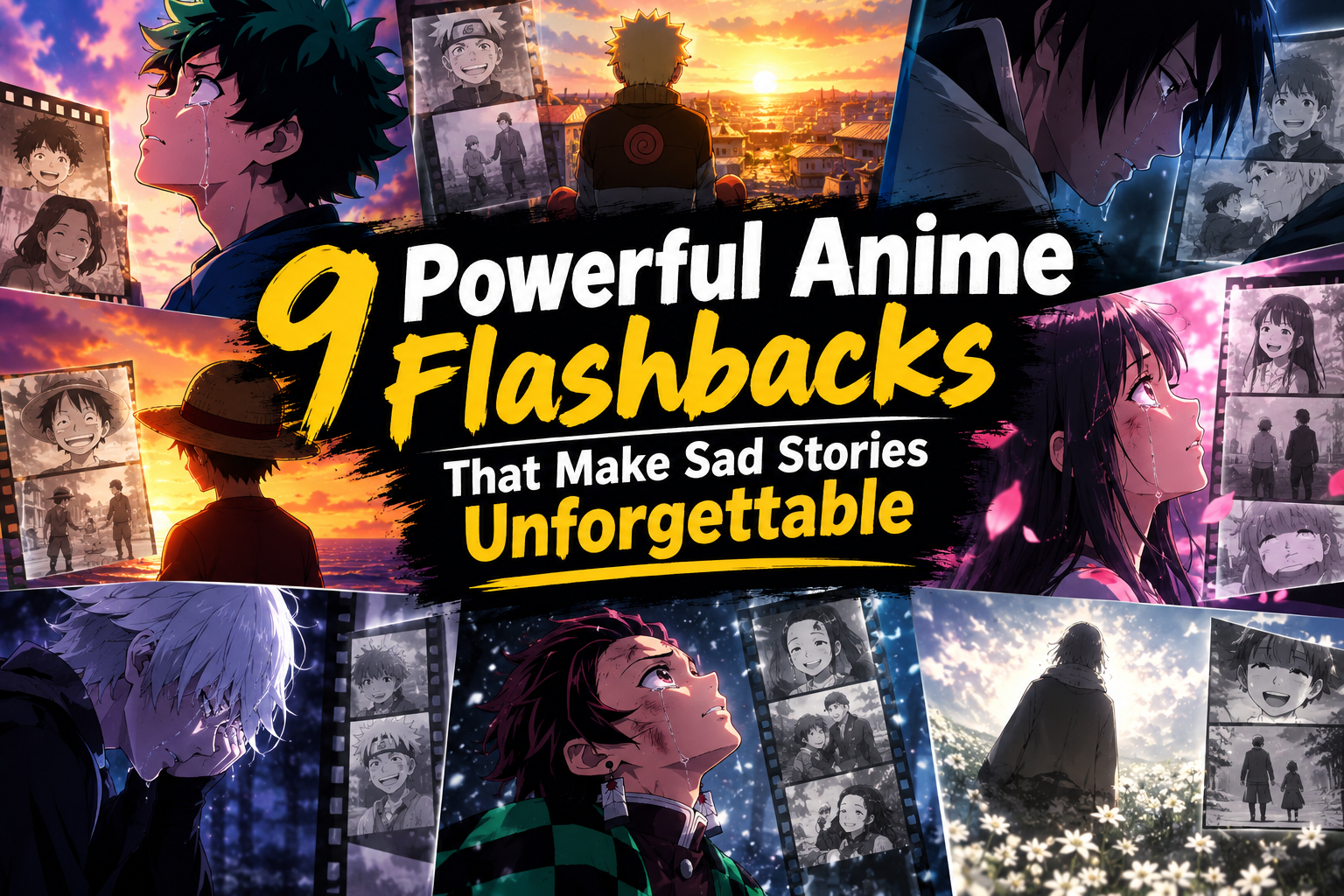
Anime Flashbacks are more than simple scenes from a character’s past. In many anime stories, they appear when a character is facing pain, making an important decision, losing someone, or remembering something they tried to forget. A well-timed flashback can suddenly change how viewers understand a character and make an ordinary scene feel deeply emotional. Recent memory research also shows that remembering emotional events can recreate measurable emotional responses, helping explain why a fictional memory can still feel powerful to an audience.
The real strength of Anime Flashbacks comes from their timing. Instead of explaining everything at the beginning, anime can hide important information and reveal it later when viewers are emotionally prepared. This technique makes the past feel connected to the present rather than looking like a separate story.
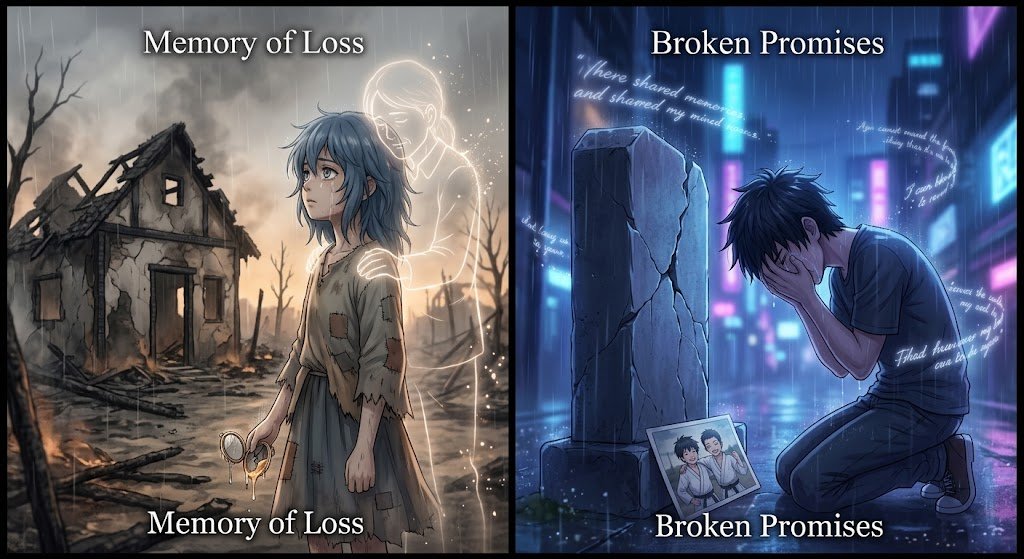
In 2026, research into Japanese animation is increasingly examining the relationship between character emotions and the surrounding scene, showing how visual context can work together with character emotion to support storytelling.
Table of Contents
- Why Anime Flashbacks Create Strong Emotional Impact
- Anime Flashbacks Reveal Hidden Character Pain
- Anime Flashbacks Change the Meaning of the Present
- Anime Flashbacks Build Emotional Attachment
- Anime Flashbacks Use Small Memories Instead of Long Explanations
- Anime Flashbacks Connect Objects With Memories
- Anime Flashbacks Make Villains More Understandable
- Anime Flashbacks Use Visual Changes to Show the Past
- Anime Flashbacks Create Emotional Surprises
- Anime Flashbacks and Memory Research in 2026
- A Simple Anime Flashbacks Comparison
- Why Anime Flashbacks Stay in Viewers’ Minds
- Conclusion
Why Anime Flashbacks Create Strong Emotional Impact
One reason Anime Flashbacks work so well is that they connect two different moments of a character’s life. The viewer sees the character in the present, but suddenly enters a memory that explains the emotion behind the current scene.
Imagine a character who appears calm throughout an episode. They do not explain their feelings and rarely talk about their childhood. Then, during a difficult moment, the story briefly shows an old home, a family member, a broken toy, or a final goodbye. Suddenly, the character’s behavior makes sense.
This is powerful because the viewer is not simply receiving information. The viewer is discovering the emotional reason behind the character’s actions.
Research published in 2026 found that recalling positive and negative emotional episodes can produce different facial and physiological responses. This does not mean that watching an anime flashback produces exactly the same response, but it provides useful evidence for understanding why emotional memories can remain powerful when they are recalled.
Anime Flashbacks Reveal Hidden Character Pain
One of the strongest uses of Anime Flashbacks is revealing pain that a character cannot express through dialogue.
Some anime characters are quiet, aggressive, humorous, or emotionally distant. At first, viewers may not understand why they behave this way. A flashback can slowly reveal the experience that shaped them.
The important part is that the flashback does not always need to show a huge tragedy. Sometimes a small childhood moment can explain a much larger personality trait.
A character who avoids friendship may remember being abandoned. A character who fears failure may remember a painful mistake. A character who protects everyone around them may remember a person they could not save.
This makes the character feel more complete because their personality has a history.
Anime Flashbacks Turn Pain Into Character Development
Good Anime Flashbacks do not exist only to make viewers cry. They should change the way a character behaves.
If the past explains why a character makes a certain decision in the present, the flashback becomes part of character development. The memory has a purpose.
A strong flashback can make viewers move from judging a character to understanding them. That emotional shift is one reason flashbacks remain an important storytelling technique.
Anime Flashbacks Change the Meaning of the Present
Another powerful feature of Anime Flashbacks is their ability to change something viewers thought they already understood.
A character may appear to hate another person. Later, a flashback reveals that the situation was much more complicated. Perhaps the character was protecting someone, misunderstood an event, or remembered the past differently.
This creates a powerful storytelling effect because the audience has to reinterpret earlier scenes.
Instead of simply adding new information, the flashback changes old information.
This technique can also create suspense. The writer may give viewers only part of a memory and reveal the complete event much later. A 2026 animation thesis examining flashback strategy describes how partial flashbacks can maintain a narrative gap and delay a full revelation until a dramatic point.
Anime Flashbacks Can Hide Important Information
A story does not have to reveal an entire memory at once.
One scene might show a character running through the rain. Another might show a broken object. A later episode may finally reveal what happened.
This fragmented approach encourages viewers to ask questions.
Why does the character remember this place?
Who was there?
Why does this object matter?
What really happened?
When the final memory arrives, earlier scenes can suddenly become meaningful.
Anime Flashbacks Build Emotional Attachment
Anime Flashbacks can also make viewers feel closer to characters.
When viewers see a character as a child, they can understand that the powerful warrior, villain, student, or leader once had ordinary dreams and fears.
The contrast between childhood and adulthood can be especially emotional.
A cheerful childhood scene followed by a difficult present creates emotional distance. Viewers see what the character once had and what has changed.
This technique is particularly effective when the flashback contains something simple rather than dramatic. A meal with family, playing outside, walking home, or talking with a friend can become meaningful after the character loses that life.
Anime Flashbacks Make Ordinary Memories Feel Important
A memory does not have to contain an enormous event to become emotionally important.
Sometimes the smallest memory becomes powerful because the character can no longer experience it.
That is why anime can spend time showing ordinary moments. The viewer may not understand their importance immediately, but later those moments become symbols of happiness that has disappeared.
Research on autobiographical memory published in 2026 also emphasizes that remembered experiences can retain and transform internal thoughts and feelings rather than functioning like perfect recordings of the past.
Anime Flashbacks Connect Objects With Memories
One of the most effective techniques in Anime Flashbacks is using objects as emotional triggers.
A photograph, necklace, toy, letter, weapon, school uniform, house, song, or food can suddenly remind a character of the past.
This works because the object exists in both timelines.
The character sees something in the present, and the story moves into the past.
The object becomes a bridge between two moments.
For example, an old photograph might show a happy family before a major loss. A broken sword might remind a warrior of the person who originally gave it to them. A simple childhood toy might represent a promise that the character never fulfilled.
Anime Flashbacks Give Objects Emotional Meaning
Before the flashback, an object may look ordinary.
After the flashback, the same object feels completely different.
This is an important storytelling trick because the emotional meaning is created through context rather than explanation.
The audience learns that objects can carry memories.
Anime Flashbacks Make Villains More Understandable
Not every villain needs a tragic childhood, but Anime Flashbacks can make antagonists more understandable by showing how their beliefs developed.
A villain may believe that people cannot be trusted because of something that happened years earlier. Another may have experienced rejection, betrayal, loss, or failure.
The flashback does not necessarily excuse their actions.
Instead, it provides context.
That distinction is important. A strong story can allow viewers to understand why a character became cruel without suggesting that cruelty is acceptable.
This creates more complex characters because the audience sees both the present behavior and the history behind it.
Anime Flashbacks Use Visual Changes to Show the Past
The emotional power of Anime Flashbacks does not come only from the writing. Visual presentation also matters.
Anime can change color, lighting, camera movement, background detail, facial expressions, sound, and pacing when entering a memory.
A warm childhood scene might use soft lighting. A traumatic memory might become darker or visually fragmented. A peaceful memory may use slower movement and longer shots.
These choices tell viewers that the memory has a different emotional atmosphere.
2026 research on Japanese animation is examining how character emotion interacts with scene space, showing why the environment surrounding a character can be important to narrative understanding.
Anime Flashbacks Can Make the Past Look Different From Reality
A memory does not always need to look exactly like the present-day world.
Anime can deliberately make memories feel dreamlike, incomplete, distorted, or symbolic.
This can communicate that viewers are seeing the character’s remembered experience rather than watching a neutral historical recording.
That difference can make the flashback more psychologically interesting.
Anime Flashbacks Create Emotional Surprises
The strongest Anime Flashbacks often arrive at the moment when viewers least expect them.
A character may be fighting, walking through an old location, speaking to someone, or preparing to leave. Suddenly, a short memory appears.
The flashback explains why the current moment matters.
This can transform a normal scene into an emotional turning point.
However, timing is extremely important. Too many flashbacks can interrupt the story and reduce their impact. A flashback becomes more effective when viewers understand why the memory appears at that particular moment.
Anime Flashbacks Work Best When the Past Affects the Present
A flashback should ideally answer an important question or create a new one.
If it only provides information that has no effect on the story, it can feel unnecessary.
But when the memory changes a decision, relationship, emotion, or conflict, it becomes part of the main narrative.
That is why well-designed flashbacks feel meaningful instead of simply feeling like additional background information.
Anime Flashbacks and Memory Research in 2026
The connection between Anime Flashbacks and memory research becomes particularly interesting when we look at how people actually remember emotional experiences.
A 2026 study in Neurobiology of Learning and Memory found that recalling emotional episodes can recreate affective responses, including greater smiling when positive memories were recalled and greater frowning when negative memories were recalled.
Another 2026 study in Communications Psychology examined how internal experiences are retained and transformed in autobiographical memory narratives. This supports the broader idea that memory is not simply a perfect replay of the past.
Anime storytelling can take advantage of this idea. A character may remember a childhood event not as a complete documentary of what happened, but as an emotionally important experience.
This gives writers freedom to use incomplete memories, repeated images, symbolic objects, and changed visual styles.
The chart above is an illustrative editorial visualization, not a scientific measurement. Its purpose is to show why several storytelling elements can work together to make a flashback memorable.
A Simple Anime Flashbacks Comparison
| Anime Flashbacks Element | Main Purpose | Emotional Effect |
|---|---|---|
| Childhood memory | Shows character history | Creates sympathy |
| Lost relationship | Explains emotional pain | Creates sadness |
| Important object | Connects past and present | Creates nostalgia |
| Partial memory | Hides information | Creates curiosity |
| Full revelation | Explains the truth | Creates emotional surprise |
| Visual memory change | Separates past from present | Creates atmosphere |
| Repeated memory | Shows unresolved feelings | Builds emotional tension |
Why Anime Flashbacks Stay in Viewers’ Minds
The lasting power of Anime Flashbacks comes from the relationship between memory and emotion.
A viewer may forget a long conversation but remember a short image of a character standing alone in the rain. They may forget an episode’s minor details but remember a childhood scene connected to a tragic ending.
This happens because storytelling does not depend only on information. Emotional context can make certain moments more memorable.
Research published in Nature Human Behaviour found that emotional arousal can enhance narrative memory through interactions among large-scale brain networks.
This helps explain why an emotional flashback can remain memorable long after the episode ends.
Anime Flashbacks Can Make Sad Stories Unforgettable
A sad story becomes stronger when the audience understands what has been lost.
Without a flashback, viewers may know that a character is sad.
With a flashback, viewers can see the happiness, relationship, dream, or person that existed before the loss.
That contrast creates emotional depth.
The past becomes part of the present.
The character is not simply sad because the story says so. The viewer has seen the reason behind the sadness.
Conclusion: The Powerful Role of Anime Flashbacks
Anime Flashbacks are one of the most effective storytelling techniques because they allow the past to influence the present. They can reveal hidden pain, explain character behavior, create mystery, change the meaning of earlier scenes, and make ordinary objects emotionally powerful.
Their strength comes from more than sadness. Good flashbacks connect memory, character, visual design, timing, and present-day conflict.
Recent 2026 memory research provides useful scientific context for understanding why emotional recollection can remain powerful, while current animation research is exploring how character emotions and visual scenes work together.
When a flashback is carefully placed, it does not feel like a pause in the story. It feels like a missing piece finally falling into place.
That is why the best Anime Flashbacks can turn a sad scene into a moment viewers remember for years.